
Who Is Actually Watching The Ground
PFAS findings put soil in the headlines. This article is about the bodies with formal powers over planning, land sales, construction, and infrastructure on the former airfield, and what the public record shows them doing.
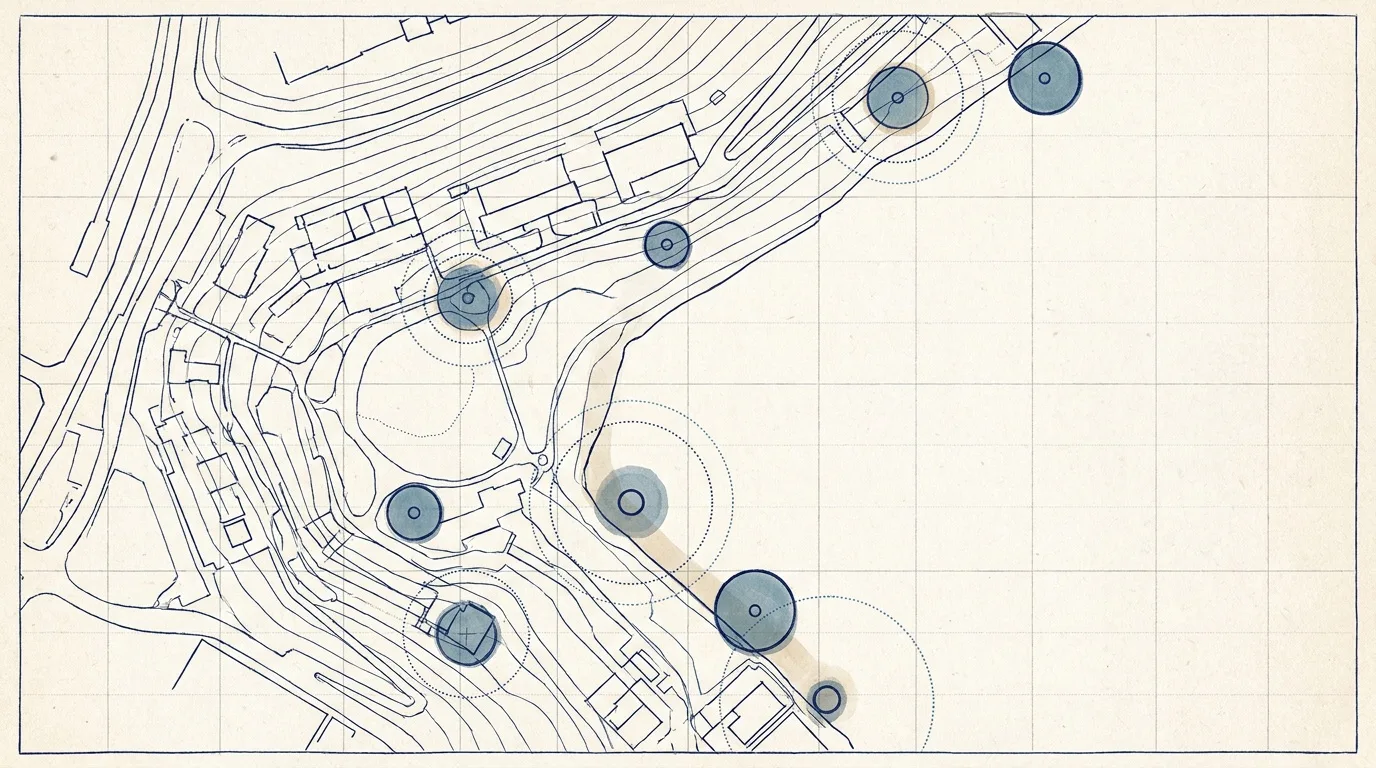
Monitoring Is Not the Same as the Contamination Story
The PFAS post on this site owns the February 2026 disclosure, threshold rewrite, clean plot, halt demand, and buyer lawsuit. This article does not repeat those findings or restate their chemistry.
Instead it maps oversight: which public bodies hold formal powers over Sde Dov, through which mechanisms, and what the district timeline and news registry show them doing through August 2026. Where the record is thin on a power or an action, that silence is noted.
Developers, banks, and contractors also watch the ground for money reasons. The who-builds post covers Ashtrom, Mizrahi-Tefahot, and infrastructure contractors. Here the subject is state and municipal authority.
The District Planning Chain
Statutory planning for the airfield runs through numbered plans validated by district and local committees. TA/3700, a separate outline plan for the coast north of the airfield, was approved in July 2012. TA/4444, the Sde Dov district plan for about 16,000 homes on about 1,300 dunams, came into force in August 2020.
The local planning committee approved the first Eshkol design plans in May 2023, about two years after the first big tender. Central and North detailed plans received final validation on 19 August 2024, thirteen days before RAMI launched the 7,159-unit tender wave.
Appeals against the detailed plans, including objections on the wind regime and on land rights, postponed the mega-tender from 25 December 2024 onward. A fifth postponement was logged on 28 January 2025. Central tenders cleared after an appeal was rejected on 3 February 2025. The record shows planning committees and appellate processes moving market access, not only drawing maps.
RAMI and the Land Marketing Monopoly
Over 90% of land in Israel is publicly owned. RAMI (רמ"י, the Israel Land Authority) markets state land to developers exclusively. Developers acquire lease rights for a limited period through sealed-bid tenders where the highest bid wins.
RAMI issued the first Sde Dov housing tender in March 2021 and closed the record August 2021 wave at about ₪4.4 billion for 1,540 homes. It launched the September 2024 mega-wave and, after freezes, closed Central and North tenders in February and March 2025. In February 2026, RAMI was named alongside the Environment Ministry as a disclosing body on PFAS findings in the old airport's soil and groundwater.
The State Comptroller examined 1,327 public residential land tenders published 2017 to 2021 and found 362 tenders covering about 63,000 housing units produced no winner. Reporting problems double-counted republished units. That audit is national context, not a Sde Dov-specific sanction, but it explains why tender failure and republication are part of oversight language here too.
The Environment Ministry: Disclosure, Process, Halt
The Ministry of Environmental Protection appears in the news registry as an actor with enforcement language, not only as a commentator. On 4 February 2026 it disclosed PFAS findings with ILA. On 17 February district records report it presented a fast track for soil treatment with PFAS guidance. On 27 March updated national PFAS thresholds changed how findings on the old airfield were read.
On 19 July 2026 the ministry demanded a halt to infrastructure works while contamination and soil treatment were handled, according to district records. That is an active restraint request on works, distinct from a press release.
The corpus does not publish the ministry's full enforcement toolkit on each migrash, specific fines, or a plot-by-plot compliance map. What you can say from the record: the ministry disclosed, reframed thresholds, pushed a treatment fast track, and later asked for a halt on infrastructure. Outcomes per lot are not fully logged here.
| Date | Recorded action | Source |
|---|---|---|
| 4 Feb 2026 | Discloses PFAS with ILA; investigations widen | Nadlan Center; TheMarker; timeline |
| 17 Feb 2026 | Presents soil-treatment fast track with PFAS guidance | District records |
| 27 Mar 2026 | National PFAS threshold update reframes readings | District records |
| 19 Jul 2026 | Demands halt to infrastructure works | District records news item |
Tel Aviv Municipality and Local Committee Permits
Building permission is local. The district timeline credits the local committee with the first excavation permit on RAINBOW in March 2024, the first cornerstone at ASHIRA in November 2024, design-plan batches in 2024 and 2026, and full building permits on leading towers in October 2025 and March 2026.
Municipal action also covers utilities and district systems. In July 2025 the local committee approved a pneumatic waste terminal for the district. In August 2024 Pangaea Sde Dov, an Israel Canada group vehicle, won the municipal tender for lot 306, the marlog (מרלו"ג, neighbourhood logistics centre). In August 2026 approval of Tel Aviv's fifth water line was framed as paving the way to occupying Sde Dov.
In July 2026 the municipality presented a Green Line progress update with Mayor Huldai, naming four stations that will serve the district. NTA (נת"ע, the transit authority) builds the line, but the municipal update is part of the public timetable record buyers see.
The Courts and the Big Bloc Settlement
The Supreme Court set the final airfield evacuation deadline to January 2019 in February 2016, locking the close of the 81-year airport. That is planning enforcement at the highest level.
On 17 September 2025 a court approved the rights table for 1,892 private owners of HaGush HaGadol (הגוש הגדול, the Big Bloc), settling division of privately owned land inside the old fence after a fight the big-bloc post on this site covers in detail. Here the point is jurisdictional: judicial approval of land-rights tables is part of how building rights reach private parcels such as Dan Real Estate's March 2025 combination deal.
Buyers on pure RAMI lots and buyers on Big Bloc combination deals sit under different oversight histories even inside the same TA/4444 map.
Bank Monitors on Accompanied Projects
Where a project is bank accompanied, the financing bank monitors construction progress before releasing escrow funds. That is private oversight with public law backing, not a government inspector on site every day.
ASHIRA's January 2026 financing line of more than ₪2.5 billion from Mizrahi-Tefahot and First International is the named example in the corpus. Luzon-Ronson closed about ₪700 million of financing for its Central project in June 2025. The buyers guide and questions-before-you-buy posts explain how accompaniment interacts with pinkas shovarim and guarantees.
The record does not name a bank monitor for every marketed project. Dimri Yama's marketing launched in December 2025 without a published bank construction line comparable to Ashira's in the registry. Absence is not proof of no monitor. It is proof this file does not show one.
What the Record Does Not Show
The news and timeline registries do not publish a single dashboard of all inspectors on site on a given week. They do not list daily soil samples by migrash. They do not report outcomes of every appeal after February 2025 beyond the tender closes that cleared.
National bodies beyond those named above may hold powers the corpus does not trace to specific Sde Dov actions: fire safety, labour inspection, antitrust review of tender design. The file does not say they are absent. It says they are not documented here in plot-level detail.
Buyer lawsuits are private enforcement. The August 2026 Gindi option-holder suit over contamination is recorded as a news event, not as a regulator's order. Courts may eventually shape duties; that docket is not reproduced in these files.
How to Read Oversight as a Buyer
Ask your lawyer which permits are preconditions to occupancy on your contract date, and which public halts could delay infrastructure you assume. Match the migrash on your contract to the permit entries in the project registry.
Treat ministry disclosure and halt demands as live regulatory facts alongside full building permits. ASHIRA's March 2026 full permit on a clean lot did not erase the July 2026 infrastructure halt demand at district level. Different bodies, different scopes.
Monitoring is layered: planning validation, tender marketing, environmental disclosure, local permits, bank accompaniment, judicial land settlements, municipal utilities. No single agency owns the whole field. The public record shows each layer moving on its own calendar. Your diligence is to see which layer binds your lot before you pay.
Projects in this story
Questions about buying here?
We are an independent guide. Tell us what you are looking at and we will answer with sources.